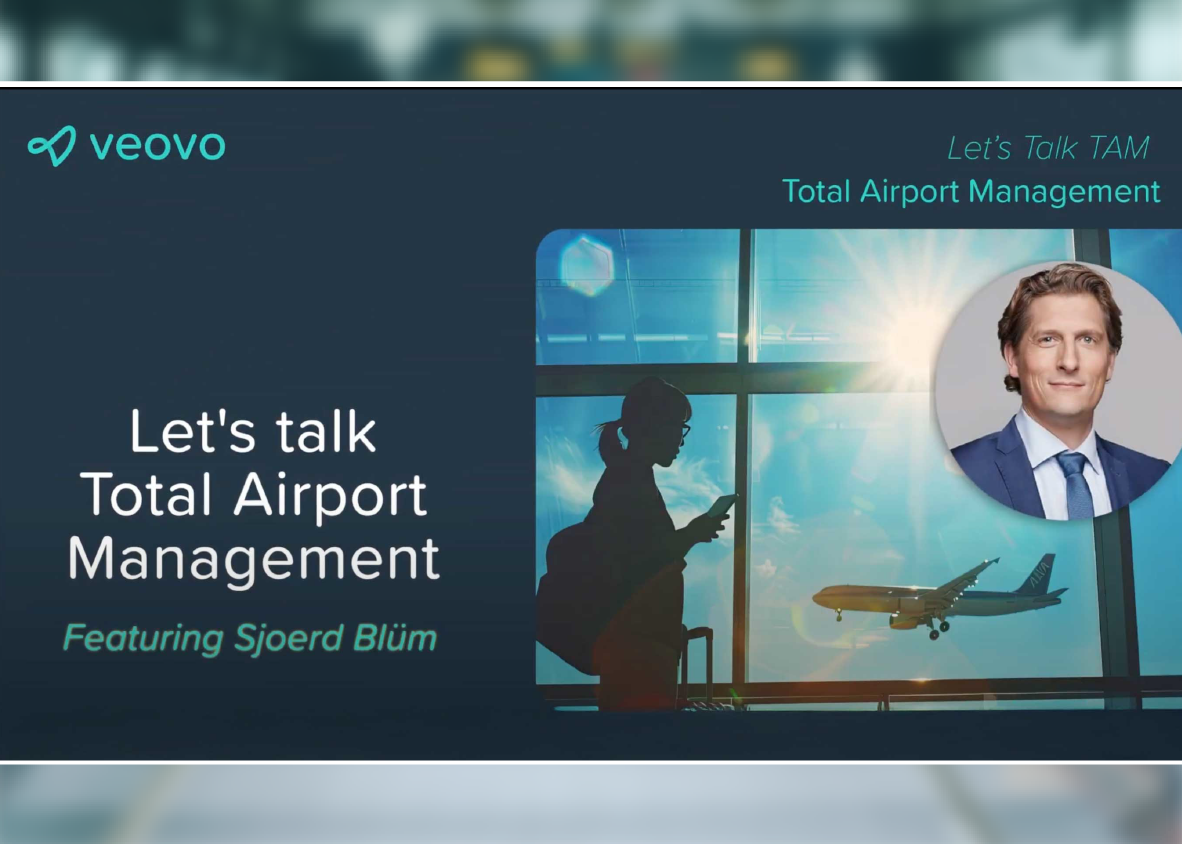
Growth in aviation has long been handled the same way. Total Airport Management starts with a simple idea: airports don’t need more space, they need better timing. Growth in aviation has long been handled the same way — build more. But building takes time and capacity can’t wait. The only way forward is to find capacity within existing infrastructure, and that means changing how airports see, connect and act on information across every domain.
Airports are complex ecosystems, made up of interlocking flows that are managed by multiple stakeholders and exposed to shifting factors like weather, schedules and staff availability. Often the pinch comes not from a lack of space but from a lack of visibility and coordination. When one part of the operation moves without alignment with another, capacity quietly slips away.
Every day, hundreds of interdependent decisions determine how passengers and aircraft move, which gate to assign, when to open lanes, where to deploy staff. Too often, these calls are made in isolation or guided by incomplete information. Concepts like A-CDM have helped, but they remain reactive, good at responding, slower at anticipating.
That model can’t keep pace with the realities of modern aviation: peaky demand, aggressive airline operating models and the cost of new infrastructure.
Airports have no shortage of data, but when it sits in silos, it becomes noise, or worse, fuels local optimisation at the expense of the whole. The real impact lies in linking it and turning it into actionable intelligence: combining live operational insight with AI to analyse, predict and optimise. It highlights what matters most and help teams act early, confidently and together.
Actionable intelligence across the airport
The shift to smarter operations begins with building a high-resolution view of what is happening inside and outside the terminal. Real-time capture of passenger movement, baggage and aircraft activity forms a vital foundation layer.
Airports are becoming forensic about passenger flow. Wait times tell one story, but the real opportunities lie deeper in the micro-processes most systems ignore. Bag drop timings. Security divest and screening. Overspill and queue reshaping. Group behaviour. Every one of these leaves a fingerprint in the data.
At one of the world’s largest airports, Veovo is using sensors and analytics to map passenger movement not just at checkpoints but from kerb to gate. The system will take real-time understanding of passengers to the next level, linking them to flights, following progress through the entire airport flow and enabling smarter actions at every step, from check in to minimising risks to on-time boarding. Beyond helping in the moment, it builds a powerful new data layer for predictive intelligence.
Flow insight alone, though, solves only part of the problem.
The real opportunity lies in linking those passenger predictions with decisions about gates, counters, lane openings, towing, staffing and flight schedules.
That’s the leap from individual domain optimisation to Total Airport Management (TAM).
What Total Airport Management (TAM) really means
TAM isn’t a single product. It’s a layering of technology, people and processes that enables airports to plan and act as one. It brings everyone from ATC to airlines and ground handlers under a shared predictive and operational view. Each sees how their decisions and actions affect what happens upstream and downstream, all within a common picture of the plan and its execution.
From check‑in to boarding to apron management, TAM orchestrates airside and landside operations minute by minute.
Some worry that automation will edge people out of these operationally critical decisions. It doesn’t. In truth, it raises the quality and timing of every one of them. Routine tasks are handled, complex trade-offs made clearer and actions aligned with the bigger picture. Decision support systems consider a world of complexity yet surface what matters, so teams can manage by exception and focus on the airport’s overall priorities for that day, whether that’s on-time performance, revenue or passenger experience.
Designed for time
Every delay carries a cost. Gate conflicts and unpredictable departures burn fuel. A spillover queue causes stress. A late stand decision ripples across the schedule. When decisions happen earlier and together, airports cut emissions, protect performance and make better use of the infrastructure they already have.
That’s the shift: from expanding space to mastering time. From static plans to dynamic intelligence. From departments to systems.
The airports that win in the next decade won’t be the biggest or the newest. They’ll be the ones that see further, move sooner and plan together.
Airports facing capacity pressure don’t always need to build more — they need to use what they have more intelligently. Total Airport Management connects flights, passengers and resources under a shared predictive view, helping every team act earlier and together.
- The capacity problem is often a timing and coordination problem — when decisions are made in silos, capacity slips away even when the infrastructure exists to support demand.
- Total Airport Management brings airside and landside operations under a common picture, enabling decision support that raises the quality and timing of every call from gate assignment to lane openings.
- The airports that win in the next decade will be those that see further and move sooner — mastering time rather than expanding space.